
I am an Assistant Professor at University College London’s Computer Science department. I was JSMF Fellow at the Complexity Science Hub and the Growth Lab at the Harvard Kennedy School. I did my PhD in Mathematics at the Institute for New Economic Thinking at the Oxford Martin School, University of Oxford.
My research draws from Machine Learning (ML), Large Language Models (LLMs), Networks, and Agent-Based Modelling (ABMs) to study the economic impacts of the net-zero transition, the Covid-19 pandemic, and (Gen)AI.
I’m looking for a PhD student to work on AI Agents in Labor and Financial markets. Fully funded! see call here
m [dot] delriochanona [at] ucl.ac.uk
Current Research
List of publications (Google scholar)
LLM/AI Agents Behaviour & Benchmarks
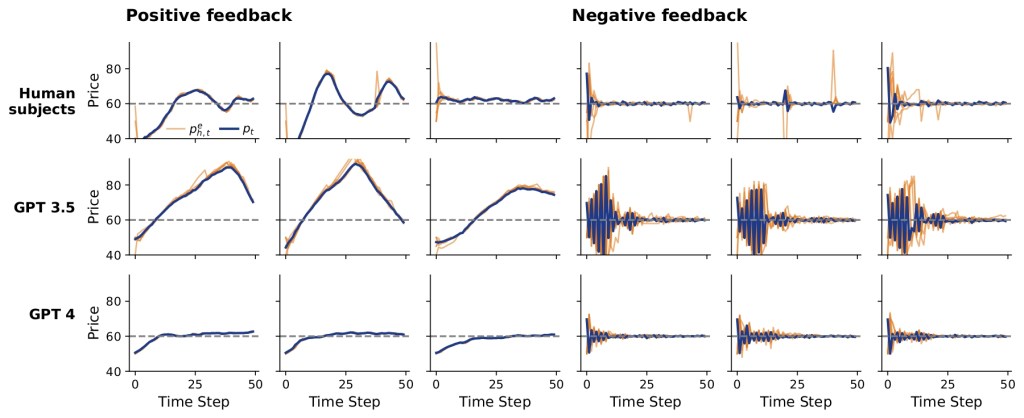
Economic and Financial markets. 📈 💸 We shows that LLMs agents can, to some extent, mimic human market behaviour. LLM agents created bubbles in financial markets and displayed bounded rationality much like humans do, but with notably less diversity in their forecasts. Read more
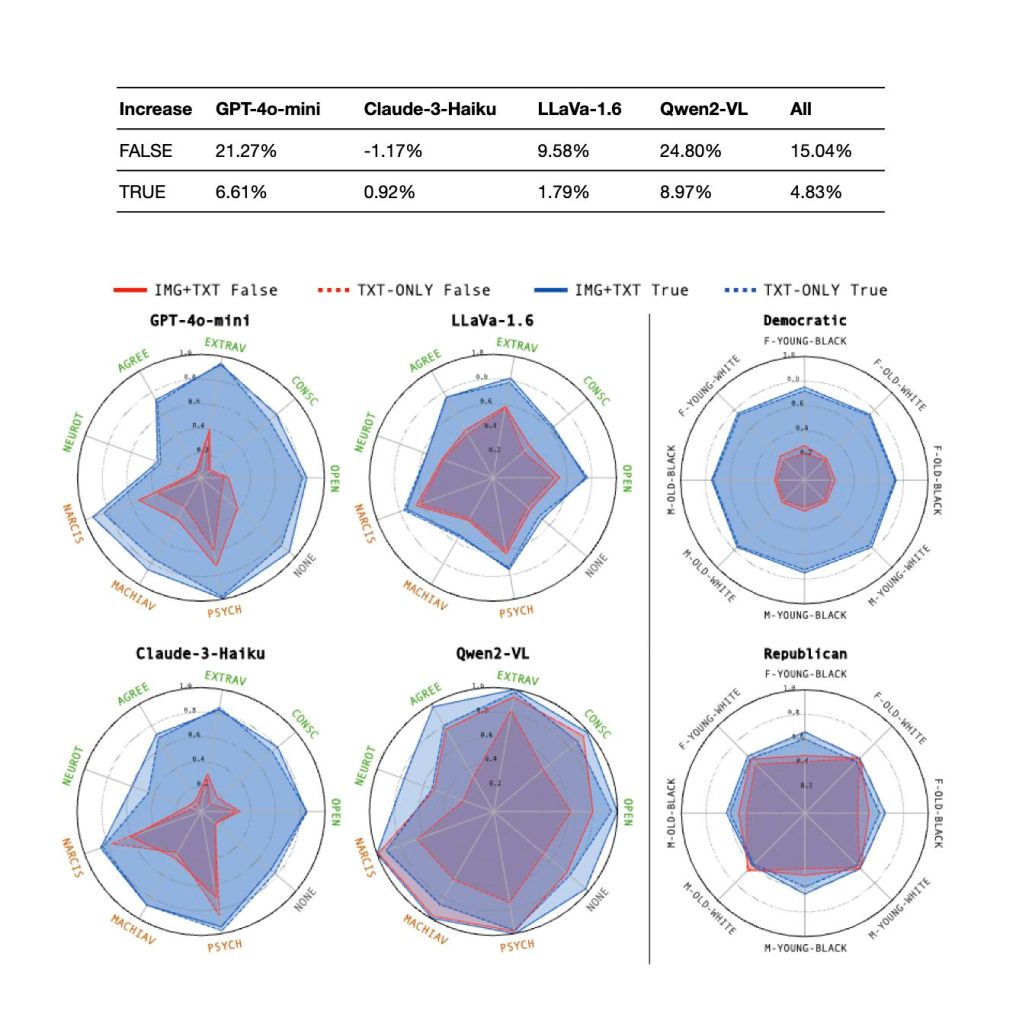
Misinformation spreading. We study vision-Language Models’ (VLMs) propensity to reshare news content. Our key findings are that: Image presence increases resharing rates by 4.8% for true news but a much larger 15.0% for false news. Dark Triad personality traits (narcissism, Machiavellianism, psychopathy) amplify resharing of false news. Republican-aligned profiles show reduced sensitivity to veracity, sharing both true and false news at similar rates. Read more
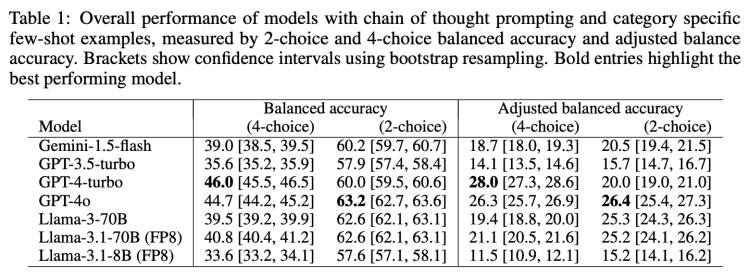
Global History Benchmark. We build a benchmark using the Seshat Databank—an interdisciplinary effort , where over a decade of work went into interpreting books and articles to compile facts about 600+ historical societies. We tested LLMs on 36,000+ questions derived from the databank. In a four-choice format, LLMs achieved balanced accuracy between 33.6% (LLama-3.1-8B) and46% (GPT-4-Turbo)—better than random guessing (25%) but far from expert comprehension. LLMs perform better on earlier historical periods. Regionally, performance is better for the Americas and lowers in Oceania and Sub-Saharan Africa for the more advanced models. Read more
Impact of AI on Jobs and Public Data Sharing
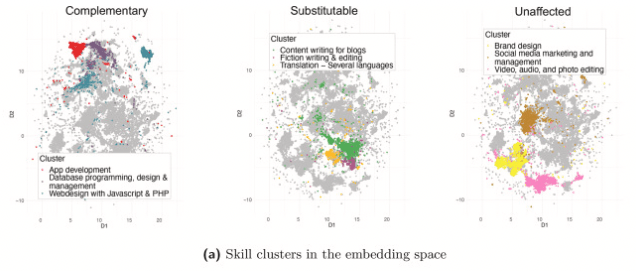
ChatGPT changed demand for skills. We study how the introduction of ChatGPT changed demand for freelancers in substitutable and complementary skills. Demand for substitutable skills, such as writing and translation, decreased by 20-50%. Within complementary skill clusters, the results are mixed: demand for machine learning programming grew by 24%, and demand for AI-powered chatbot development nearly tripled, while demand for novice workers declined in general. Read more
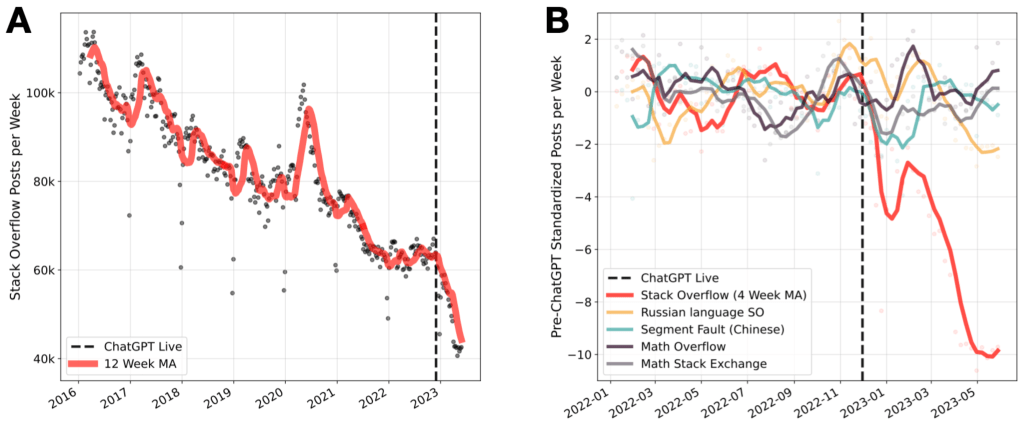
Impact on Digital Public Goods. We study the impact of Large Language Models (LLMs) on digital public goods, focusing on Stack Overflow. We estimate a 16% decrease in weekly posts on Stack Overflow after the release of ChatGPT, escalating to 25% by June. This widespread LLM adoption might diminish public web exchanges, thereby constraining the open data available for future learning. Read more
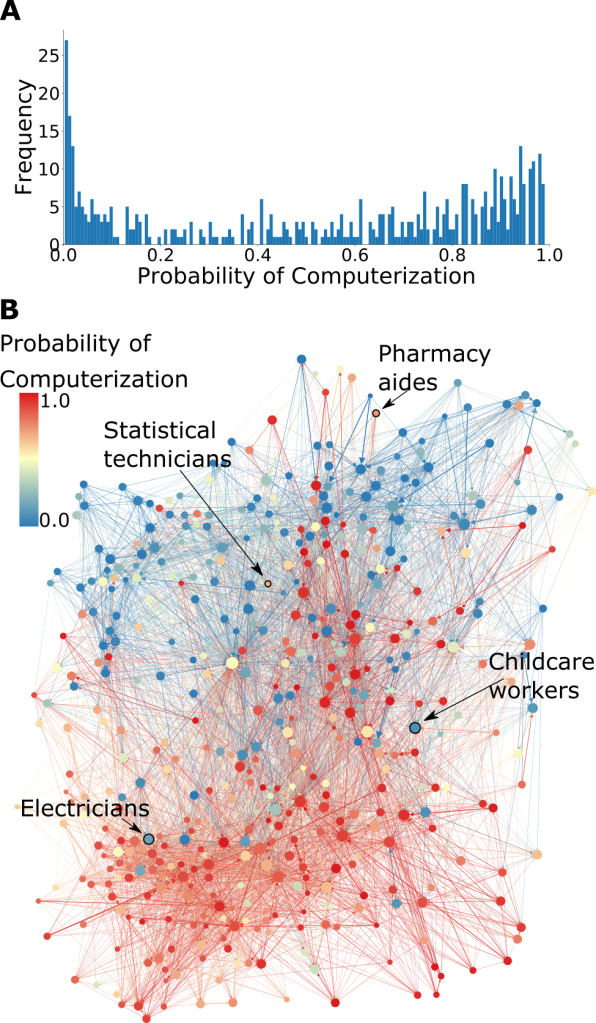
A network model of the labour market. We develop a data-driven network model to study the impact of automation on employment. We find that the network structure plays an important role in determining unemployment levels, with occupations in particular areas of the network having very few job transition. Read more
Jobs & Sustainable Development
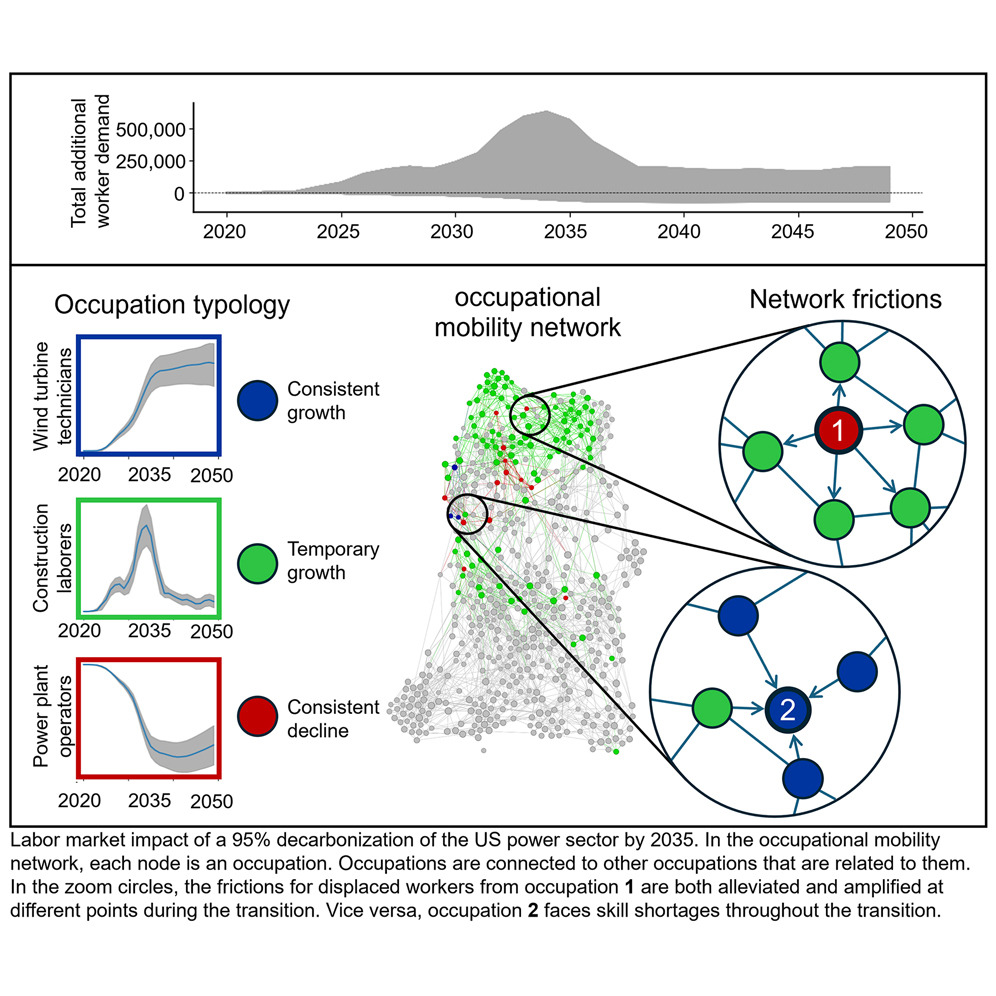
US Employment dynamics under rapid decarbonisation We analyze the employment dynamics of a fast transition scenario for the US electricity sector that reaches 95% decarbonization by 2035. We find three distinct labor market phases during the transition: scale-up, scale-down and a long-term steady state. During the scale-up phase, for every job lost in a given industry, twelve new jobs are created elsewhere. But only a few occupations experience a consistent increase in demand throughout the transition. Read more
Skill mismatch and sustainable development in Brazil. We develop a labor market model of occupational and regional mobility to study development scenarios for Brazil. We examine emission-intensive scenarios (agriculture due to Amazon deforestation) versus less intensive ones (manufacturing). We find that agricultural scenarios hit workers harder due to limited occupational and geographic mobility, potentially worsening inequality without targeted policies. Read more

Finished Research Projects
The Great Resignation
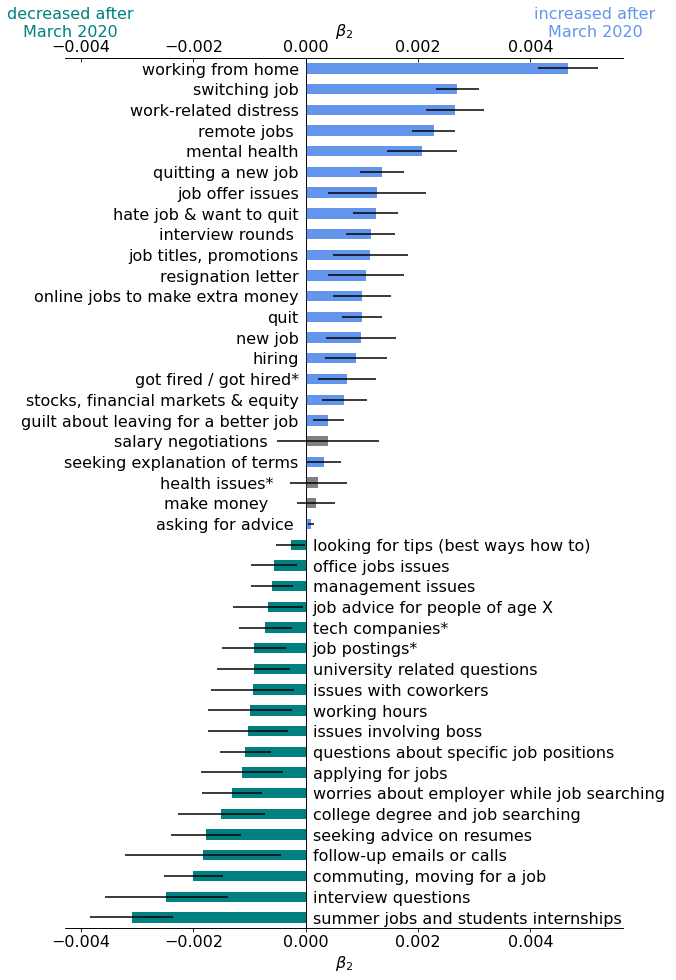
We use text analysis to investigate the changes in work- and quit-related posts between 2018 and 2021 on Reddit. We find that mental health and work-related distress topics disproportionally increased among quit-related posts since the onset of the pandemic, likely contributing to the Great Resignation.
References
- del Rio-Chanona, R. Maria, et al. “Mental health concerns precede quits: shifts in the work discourse during the Covid-19 pandemic and great resignation” EPJ Data Science (2023). Read here
COVID-19 Economic Impact
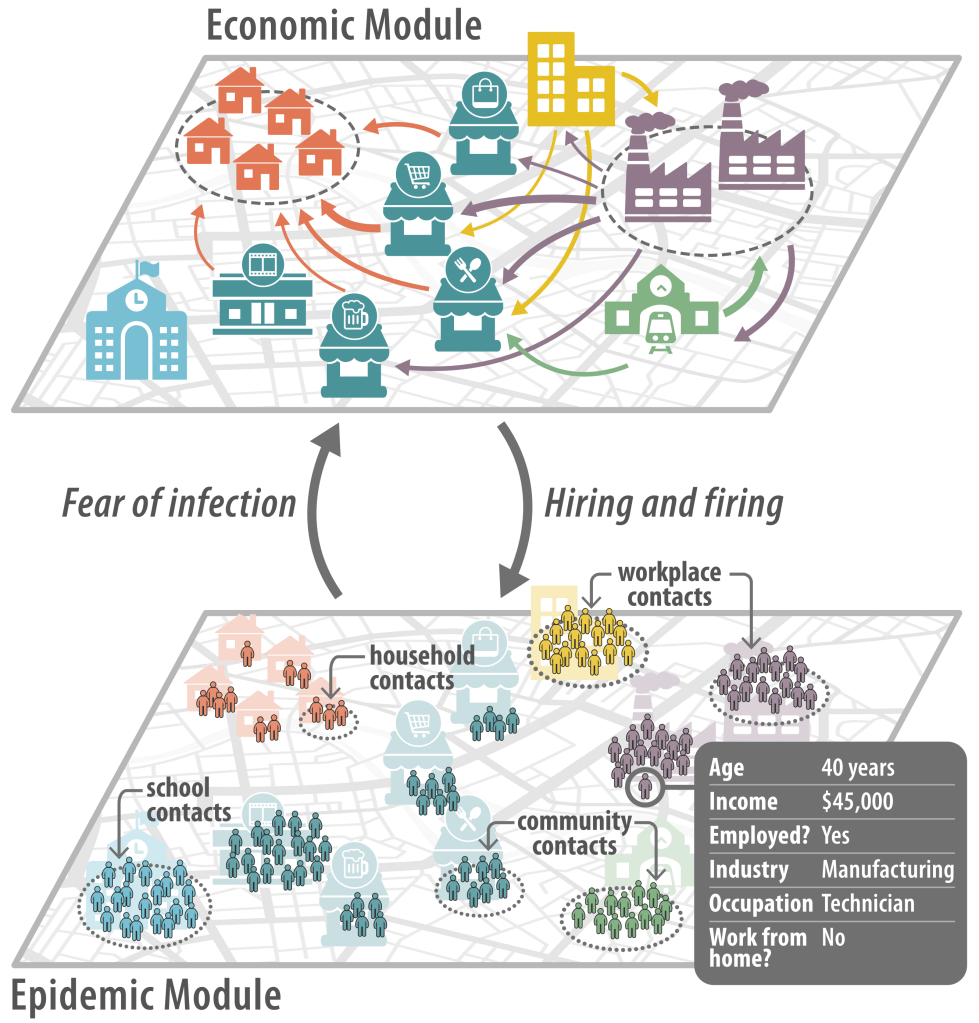
We integrated an economic and an epidemic agent-based models to assess the health-economy trade-off in New York City.
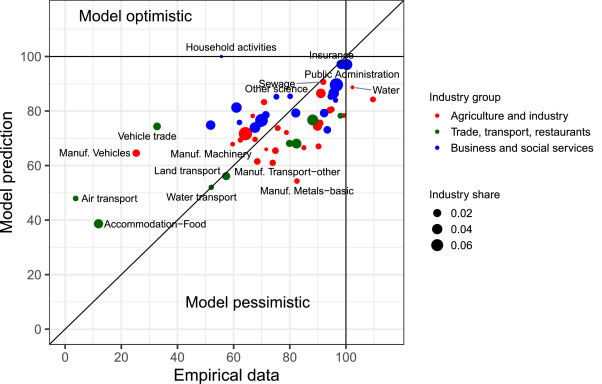
The economic model we developed predicted the economic impact of the pandemic on UK economy well at both the aggregate and sectoral level.
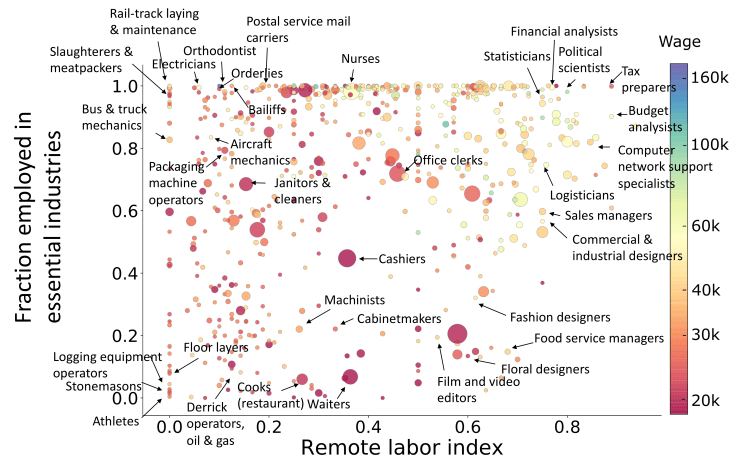
We provide quantitative predictions of first order COVID-19 supply and demand shocks for the US economy. Compared to the pre-COVID period, these shocks threaten around 20% of the US economy’s GDP and jeopardize 23% of jobs.
References
- Pangallo, Marco, et al. “The unequal effects of the health–economy trade-off during the COVID-19 pandemic.” Nature Human Behaviour (2023). Read here
- Pichler, Anton, et al. “Forecasting the propagation of pandemic shocks with a dynamic input-output model” Journal of Economic Dynamics and Control (2022). Read here
- del Rio-Chanona, R. Maria, et al. “Supply and demand shocks in the COVID-19 pandemic: An industry and occupation perspective.” Oxford Review of Economic Policy (2020). Read here
Multilayer Networks and Financial Contagion
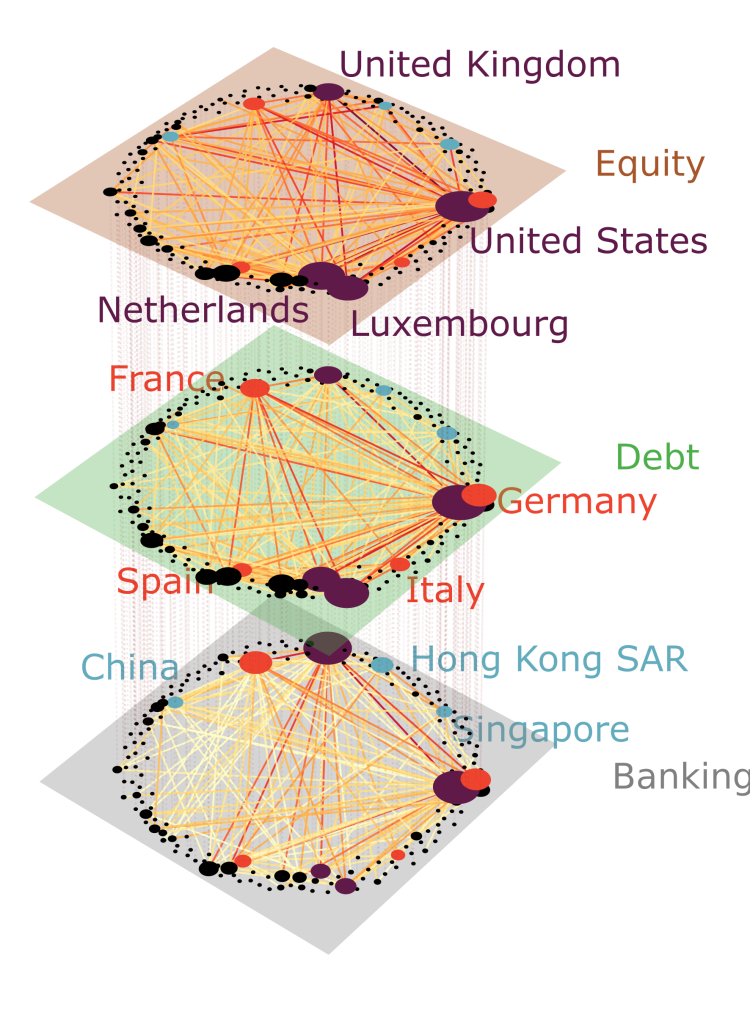
We study interconnectedness of the global financial system and its susceptibility to shocks. We study multiple channels of financial contagion using a multilayer network approach.
References
 Maria del Rio-Chanona